








































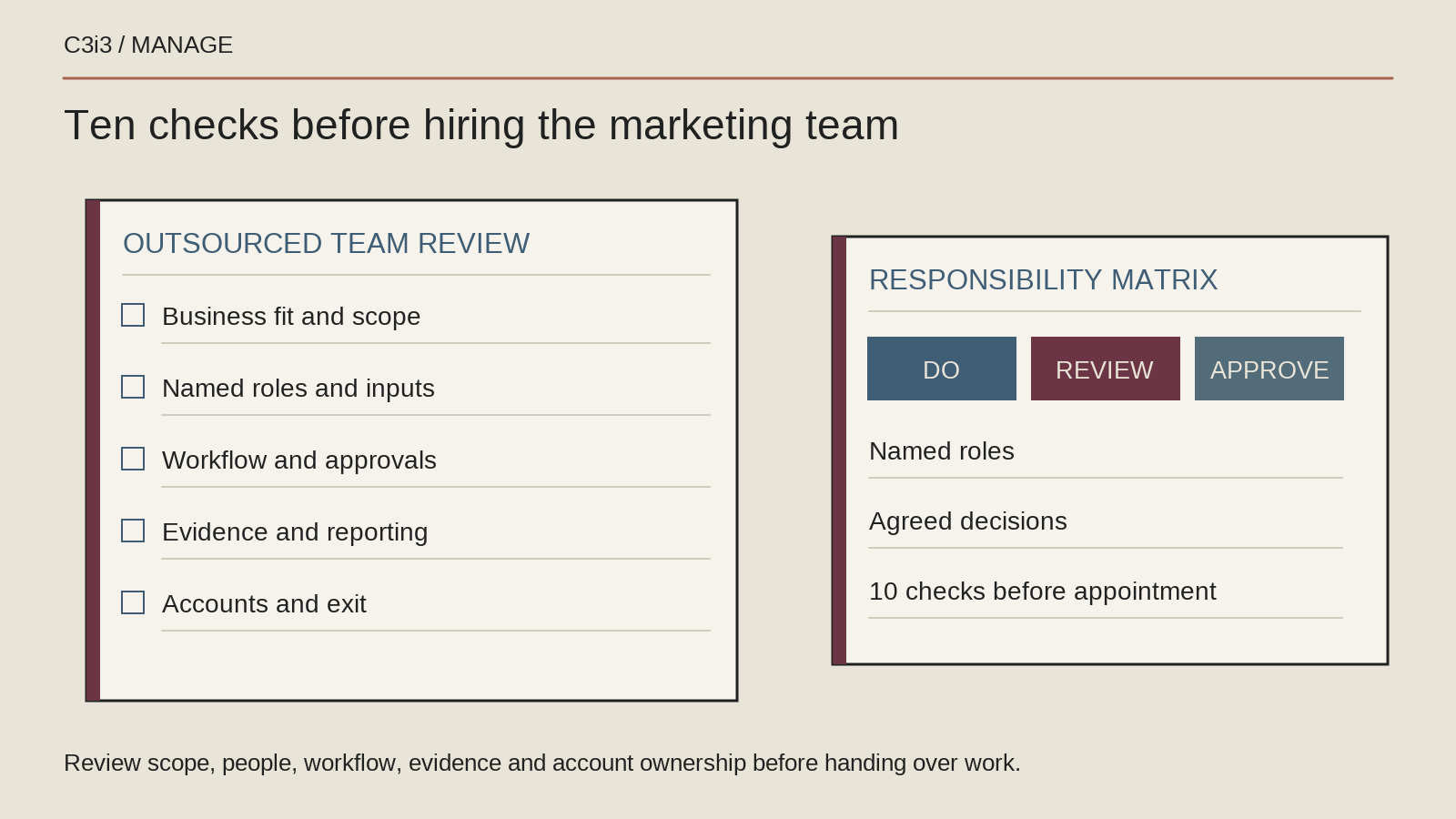
In this article
You want marketing to keep moving without chasing every brief, approval and missing password. An outsourced team can help, but a promise to handle everything leaves too much undecided. Compare how the work will operate once introductory meetings finish.
These ten checks help business owners evaluate ongoing marketing management. They focus on the working arrangement, evidence you can inspect and responsibilities your team keeps. Use the same questions with each candidate so a polished proposal is supported by a practical operating plan.
1. A clear first business priority
Ask what the team would investigate first and what decision that investigation supports. A useful answer connects your services, capacity and current inquiry problem with a manageable priority. It should also explain what information the team needs from you. Be cautious about accepting a fixed activity list before anyone understands the business. Request an example of how priorities would change if the office reported that inquiries were plentiful but unsuitable for the work you want.
2. A written boundary around ongoing work
Review what is included, what needs separate agreement and how competing requests are handled. Content updates, campaign coordination, reporting and technical website changes can involve different skills. Ask who handles each area and how the team explains work outside its scope. A useful agreement gives your office a route for requests without suggesting every possible task can happen immediately. Check how a new priority affects work already agreed for the current period.
3. A named person responsible for coordination
Find out who keeps the work moving and who covers that role during absence. Your contact should be able to explain priorities, dependencies and the next decision without making you contact several specialists. Ask how requests enter the workflow and where you can see their status. A named contact is helpful only when that person has the responsibility to coordinate delivery and return a clear answer when a task becomes blocked.
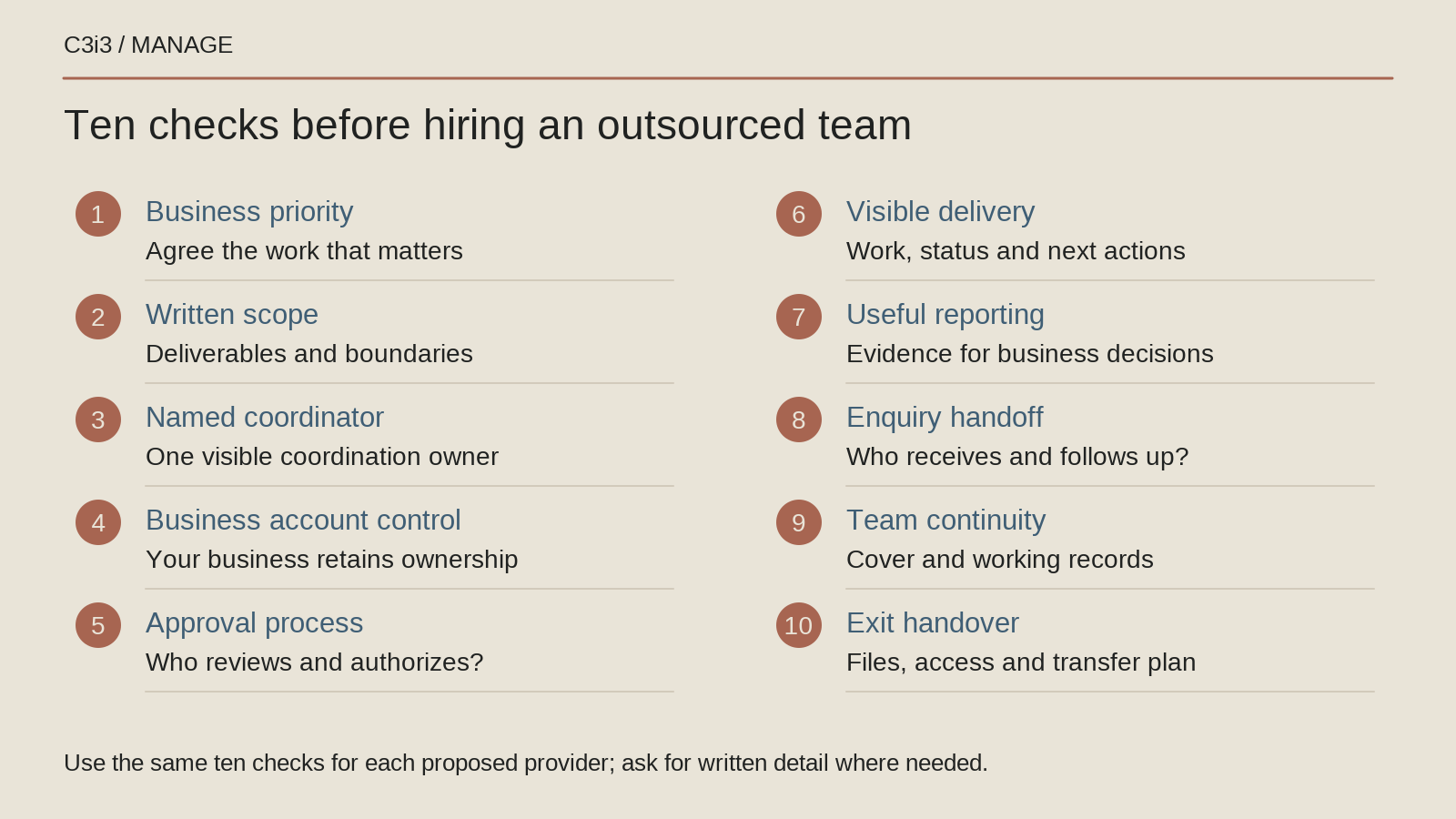
4. Business control of the working accounts
Confirm that your business retains appropriate administrative access to its marketing assets. Invite the team through named user roles rather than surrendering a shared login. Google's Analytics permissions guidance distinguishes roles for viewing and managing settings. Ask the candidate to list the access it needs and why. Verify the arrangement yourself before work begins, including recovery contacts controlled by the business and a documented backup administrator.
5. A workable approval process
Agree who can approve factual claims, service changes, campaigns and publication. Ask how briefs will be presented and how much context your approver receives. The team should identify decisions early enough for your staff to respond, then show what happens if approval is delayed. Confirm which routine changes can proceed under an agreed brief. This prevents an everyday update from waiting unnecessarily while preserving business review for changes that affect customers or commitments.
6. Visible delivery and change records
Request a simple view of agreed tasks, current status, blockers and completed work. You should not need to interpret a specialist's internal production system to know what happens next. Ask how a published change is checked and recorded. For measurement changes, Google's Tag Manager preview guidance illustrates a concrete testing step. Have the candidate explain its own release and review process, including who resolves a problem discovered afterward.
7. Reporting that answers a business question
Look at an anonymized sample report and ask which decision it would help you make. Traffic and search visibility can provide context, but you also need a truthful account of inquiries and known limitations. Google's Search Console performance guidance describes search clicks and impressions, which are distinct from customer contacts. Ask how the team will combine platform evidence with your office's knowledge of lead fit and follow-up outcomes.
8. An explicit inquiry handoff to your staff
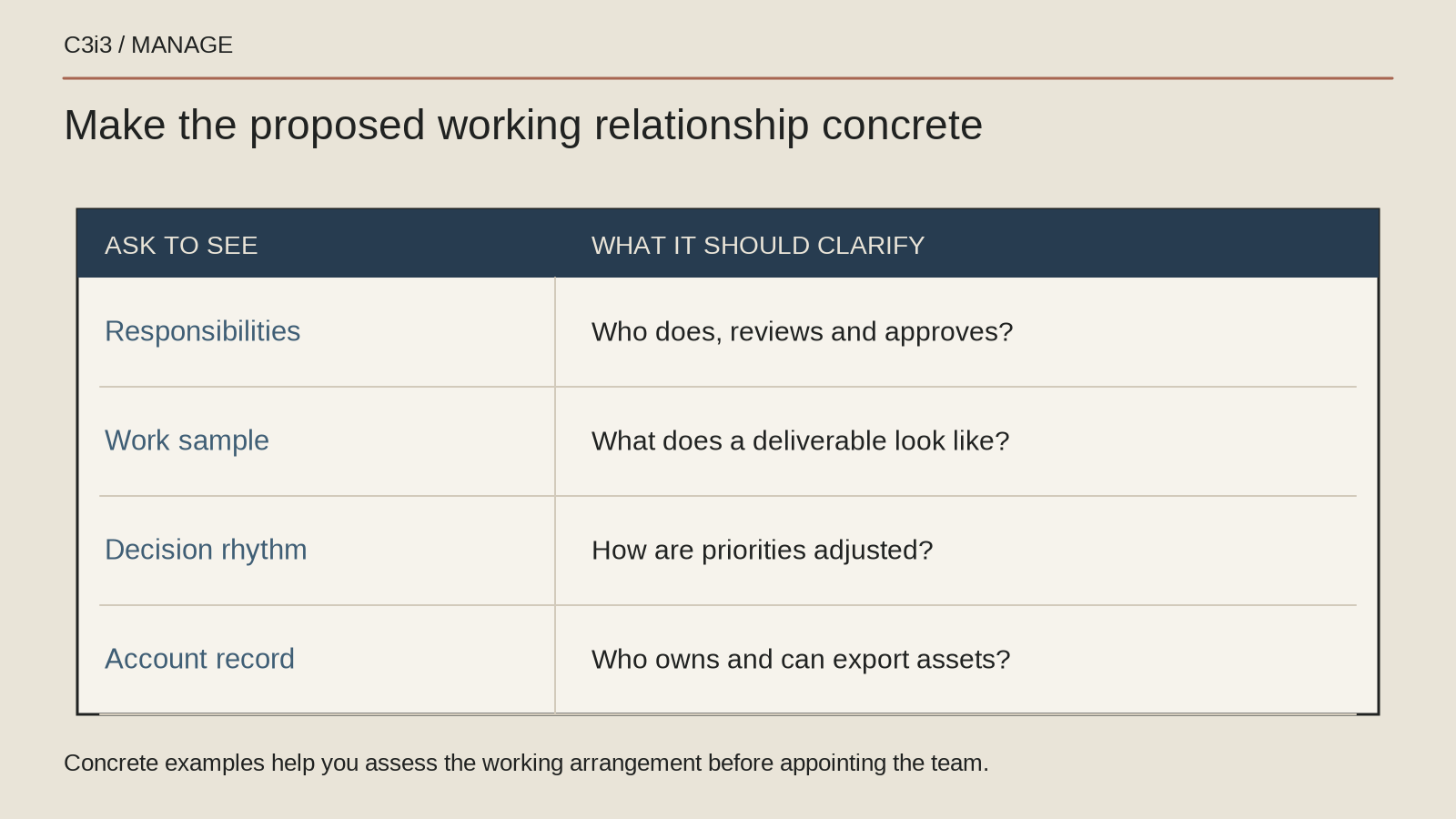
Ask what happens after someone submits a website form. The team may maintain routing and automation while your office handles conversations, but the boundary must be stated. Name the primary responder, backup and escalation contact. Request a demonstration that reaches a human response, not just an automatic acknowledgement. Confirm how the team and office will investigate a missing inquiry together without either side assuming the other owns every part of the process.
9. Continuity when people or priorities change
Find out where account details, current briefs, reporting definitions and unresolved tasks are documented. Another team member should be able to understand the arrangement when the usual contact is away. Ask what happens if your business changes a service, hires an internal marketer or needs to pause a campaign. A useful answer explains the handover and decision process. It does not depend on one person remembering the history of every conversation.
10. A usable exit and handover arrangement
Discuss the end of the relationship while everyone is planning the beginning. Agree how your business receives current work, account access information, relevant files and open task notes. Clarify ownership and any limits on third-party materials in the agreement. Ask how agency access is removed after a verified handover. A clear transition process helps you assess the working arrangement today and gives both parties a shared understanding if your needs later change.
Keep this checklist beside you
Questions before the next step
Should we choose the team offering the most services?
Choose the scope that solves the work you need managed. A broader list is useful only when the team can explain responsibilities, capacity and coordination. Ask how the proposed arrangement handles a real request from your office.
Can an outsourced team replace every internal marketing responsibility?
Your business still supplies service knowledge, approves important claims and handles responsibilities retained in the agreement. A good working arrangement makes those inputs predictable instead of assuming the agency can infer every decision.

How C3i3 Can Help
C3i3 can discuss your current workload and define where ongoing support would help. Our Manage services connect marketing coordination, content, website care and performance review around agreed priorities.
Bring one recent request that became difficult to move forward. We can map the responsibilities and show what a workable support arrangement would need to cover.