








































In this article
You have a folder full of article ideas and several half-finished drafts. Then customer work gets busy. The person who knows the subject cannot review, the photographs are still on someone's phone and nobody remembers which draft was approved. Another month passes without publishing.
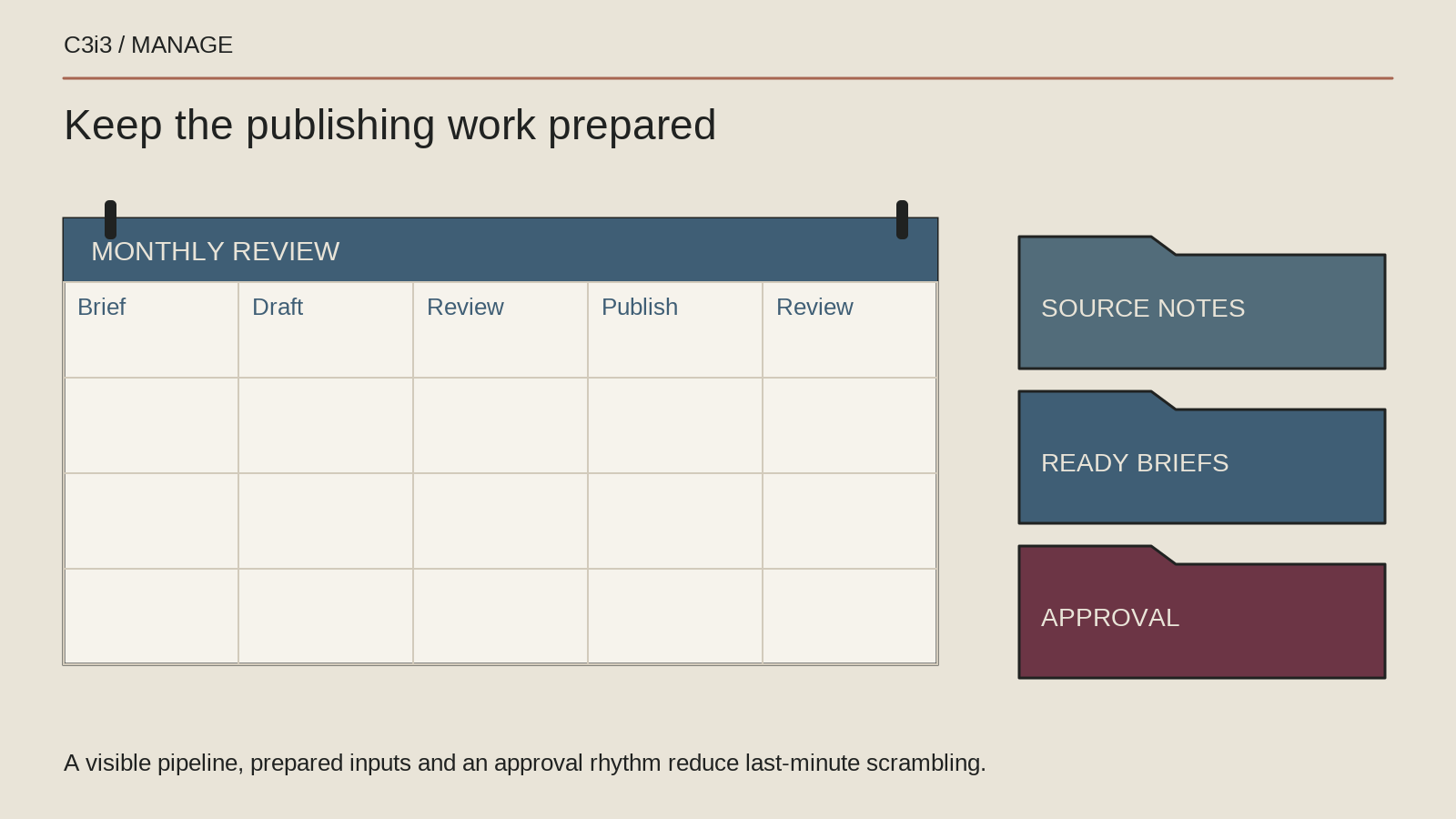
This is often a production problem rather than a shortage of ideas. Content marketing services become useful when they move real material through collection, writing, review, publication and maintenance. A longer topic list will not help if every article still depends on the owner arranging each handoff.
Identify the stage where articles stop
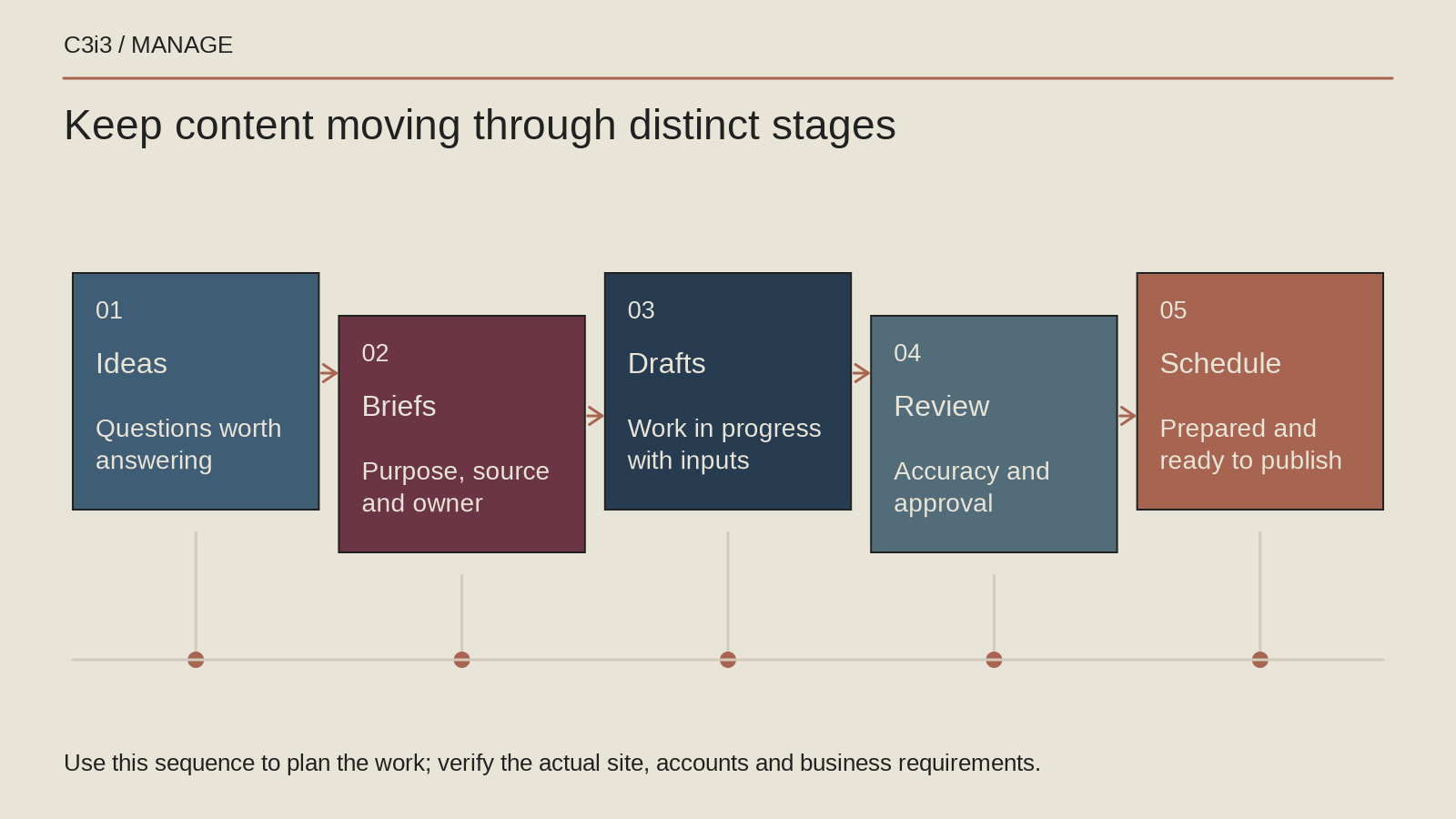
Review the last few unpublished pieces. Label the current obstacle: missing source information, unfinished draft, conflicting feedback, unavailable images or no one assigned to publish. Count the work waiting at each stage before asking the team to suggest more topics.
A useful idea is not a production-ready brief. A project story needs verified scope and permission to use material. A service explanation needs an expert who can check accuracy. Identify those requirements before booking a publication date.
Treat the findings as a capacity decision. If every piece waits for one busy owner, either change the review method, narrow the planned output or assign a qualified internal reviewer.
Collect evidence while the work is fresh
Create a simple capture routine after a completed project or repeated customer question. Ask staff to record the situation, the decision, the explanation and any approved supporting material. Short notes can be enough for a writer to prepare a focused follow-up interview.
Keep customer details and permissions with the source record. Do not expect a writer to infer whether a photograph can be published or whether a story accurately reflects your role. Remove unnecessary identifying information before sharing material outside the business.
Google's people-first content guidance emphasizes useful, reliable information. Your firsthand knowledge should inform the article, rather than being replaced by a generic summary of other pages.
Give each article a short production brief
State the reader's immediate question, the answer the business can support and the material available to explain it. Add the intended next step and any claims that need checking. The brief should let the writer begin without guessing the offer or interviewing five people separately.
Assign one coordinator to collect missing inputs and manage the stages. A writer, designer and publisher may all contribute, but someone needs to own the whole item. Confirm whether an outsourced provider supplies that coordination or only hands over copy.
Set dates after checking reviewer availability. If the subject expert will be on customer work all week, a deadline that assumes instant feedback is unlikely to survive the first draft.
Make expert review brief and specific
Send the expert a complete draft with the factual questions highlighted. Ask them to verify the process, limitations and examples. A short scheduled discussion can resolve uncertainty faster than several open-ended requests for comments spread across different channels.
Consolidate feedback through one responsible editor. Distinguish a necessary correction from a preference that can be handled within the existing style. Otherwise each reviewer restarts the writing and the article gradually loses the clear answer it was meant to provide.
Keep one current version and record approval. If business facts change afterward, reopen the relevant decision explicitly. Do not assume a previously approved draft remains accurate simply because it has reached the publishing queue.
Include publishing and quality checks in the job
A document in a folder does not help the customer who visits the website. Define who places the article in the template, prepares images, checks links, writes the search description and tests the finished page. Include those tasks in the capacity estimate.
Check readable headings, meaningful links and appropriate image descriptions. The W3C's page structure tutorial explains why a logical structure helps people navigate content. Preview the article on a phone and check the intended next step before publication.
Record the live address and review date. Keep original source material accessible so a later correction does not require tracking down the person who first supplied the information.
Plan for busy weeks and changing personnel
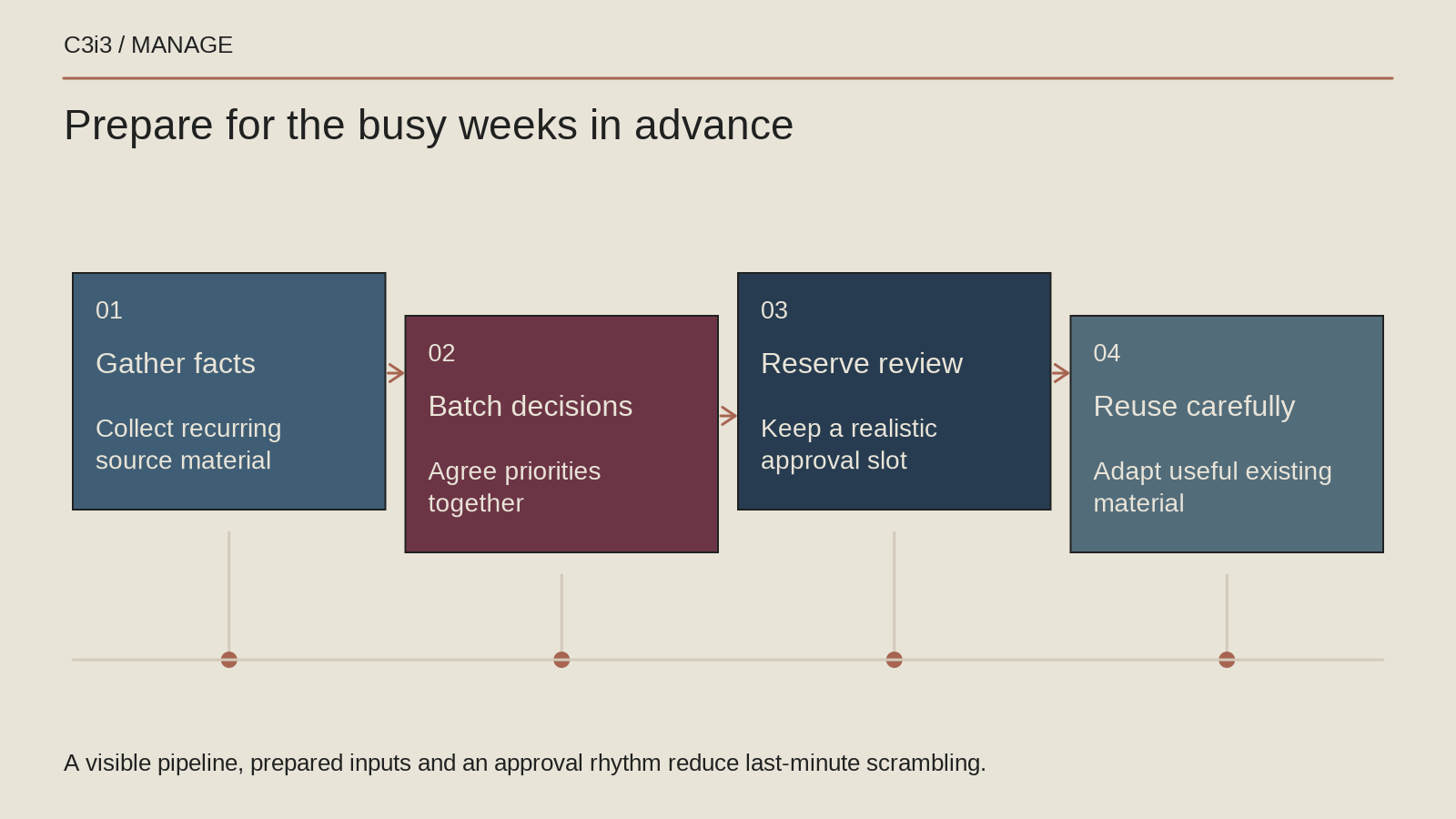
Build a small reserve of approved articles that remain useful without a time-sensitive event. Keep them separate from drafts still needing factual review. A reserve provides flexibility when customer work grows, but it should not become permission to publish stale information.
Document the publishing steps and keep access under business control. Another approved person should know how to find the current brief, identify the reviewer and complete a routine release. The same requirement applies when an agency account manager changes.
Review the pace against capacity and usefulness. Fewer complete, reliable articles can serve the reader better than an ambitious calendar that repeatedly collapses. Change the commitment openly instead of turning every missed date into an emergency.
Keep this checklist beside you
Questions before the next step
Can an agency publish without interviewing our team?
Sometimes existing approved material is enough, but specialist claims and business examples need reliable input. Agree on the evidence required. Outsourcing production does not give the agency firsthand knowledge of your services or permission to invent project details.
How often should our business publish?
Choose a pace you can support with useful material, review and publishing capacity. There is no universal frequency that makes a blog effective. Start with a realistic commitment and adjust using reader needs and actual production experience.

How C3i3 Can Help
C3i3 can provide dedicated content support to coordinate writing, review and website publication within an agreed scope. Bring your unfinished drafts, available project material and the points where work usually stops.
We can help establish a practical production process with clear responsibilities and review windows. Your team supplies the knowledge and approvals, while defined support helps turn that input into complete, checked articles at a pace your business can sustain.